
Setting Boundaries When You’re Used to People-Pleasing
November 20, 2026 · By Farah AlHomoud
Setting boundaries is an important part of learning to honour our needs, feelings, and experiences. Yet, for many of us, it doesn’t come naturally.
We might worry about disappointing someone, creating conflict, or being perceived as difficult. Sometimes, we even question whether we’re allowed to have certain limits in the first place.
At their core, boundaries give us permission to consider our own well-being rather than automatically putting ourselves aside to accommodate others. This doesn’t mean our needs always come first, or that we stop caring about the people in our lives. It simply means our needs are part of the equation, too.
What Do Boundaries Actually Look Like?
Boundaries are the limits we establish around what feels comfortable, acceptable, and healthy for us. They help us identify our capacity, communicate what we are and aren’t okay with, and make choices that protect our emotional energy.
Boundaries look different for everyone, and they show up in both direct conversations and quiet, everyday moments. Here are a few ways they can look in practice:
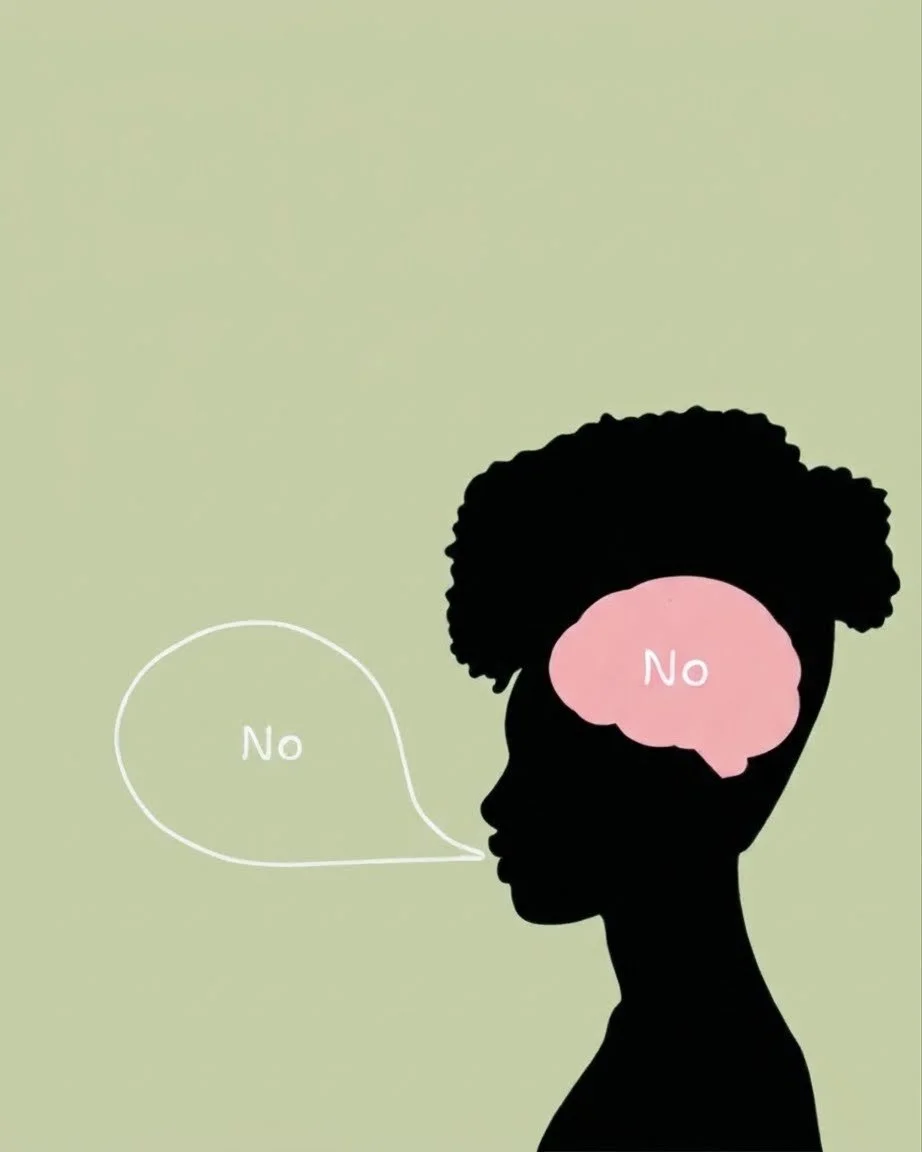
Saying no: Declining an invitation or request when you don’t have the bandwidth, or when you simply don’t want to participate.
Expressing discomfort: Letting someone know when a comment or behaviour doesn’t sit right with you.
Protecting your time and energy: Recognizing when you need to rest, unplug, or limit how much you take on.
Communicating your needs: Asking for more space, consideration, privacy, or support in a relationship.
Stepping away: Choosing to leave a conversation or situation that feels unproductive or overwhelming.
Making decisions for yourself: Allowing yourself to make choices that feel right for you, even when others might choose differently.
The connection between people-pleasing and boundaries
For those of us who are used to prioritizing everyone else’s feelings, setting limits can feel especially uncomfortable. This is often even harder if your needs weren’t consistently acknowledged or respected growing up. When you learn early on that keeping the peace is the best way to stay connected, prioritizing yourself as an adult can feel unfamiliar or even unsafe.
In daily life, people-pleasing shows up in subtle ways: agreeing to things we don’t want to do, avoiding awkward conversations, or feeling responsible for keeping everyone around us happy. In the moment, it feels like the safer choice because it helps us avoid tension, disappointment, or the possibility of someone being upset with us.
Over time, though, constantly sidelining ourselves leaves us feeling disconnected from who we are. When we’re always tuned into what everyone else wants, we lose sight of our own preferences and limits.
Setting boundaries offers a way back to ourselves. It allows us to show up authentically rather than out of obligation or fear, and with people who are willing to respect them, it creates space for deeper connections.
What this can sound like in practice
When you’re so used to focusing on keeping everyone else happy or being liked, knowing what to say is often the hardest part. Depending on the situation, a boundary can be soft and warm, or firm and direct. A few simple phrases you can use include:
"I’d love to support you with this, but I don't have the capacity to take it on right now."
"I’m feeling a bit overwhelmed today, so I’m going to head home early and recharge."
"I care about our friendship, which is why I want to be honest. That comment didn't sit well with me."
"I’m not comfortable discussing that, so let's change the subject."
"I’ve thought about it, and I’m going to stick with my decision."
Someone Else’s Reaction Doesn’t Determine Whether Your Boundary Is Healthy
One of the hardest parts of setting boundaries is accepting that some people may feel disappointed, surprised, or frustrated when you begin communicating limits that weren’t there before.
It’s important to remember that someone else’s discomfort doesn’t mean you’ve done something wrong.
We can aim to be respectful and considerate while still being clear about what we need. Being kind, however, doesn’t mean making every decision around keeping other people comfortable. You can care deeply about how someone feels without making yourself responsible for managing their reaction.
If someone consistently ignores or pushes past your limits, it is worth paying attention to how sustainable that dynamic really is. Over time, staying in relationships where your boundaries aren’t respected often leads to quiet resentment and exhaustion. Adjusting how much access someone has to your time, energy, or emotional space isn’t about punishing them. It is about protecting your well-being and honouring the most important relationship you have: the one with yourself.
Learning to honour your boundaries takes practice
Setting limits feels unfamiliar at first, especially if you’ve spent years prioritizing others. You might feel a wave of guilt after saying no, second-guess whether you should have spoken up, or find yourself slipping back into old habits.
That doesn’t mean you’re failing. Learning to advocate for yourself is an ongoing process, and it won’t always happen seamlessly.
You can be a kind, compassionate person, care deeply about others, and still choose not to abandon yourself in the process. Your needs and feelings deserve consideration, too.
As a Registered Clinical Counsellor, I support women across British Columbia in untangling patterns of people-pleasing, self-doubt, and boundary guilt at a pace that feels safe for their nervous system. You can learn more about my approach on my About page, or explore working together by booking a session whenever you feel ready.